Flat Roofing
Flat roof warning signs you should not ignore
Persistent standing water, damaged surfaces and recurring leaks: what to record and what to ask before agreeing to a flat roof repair.
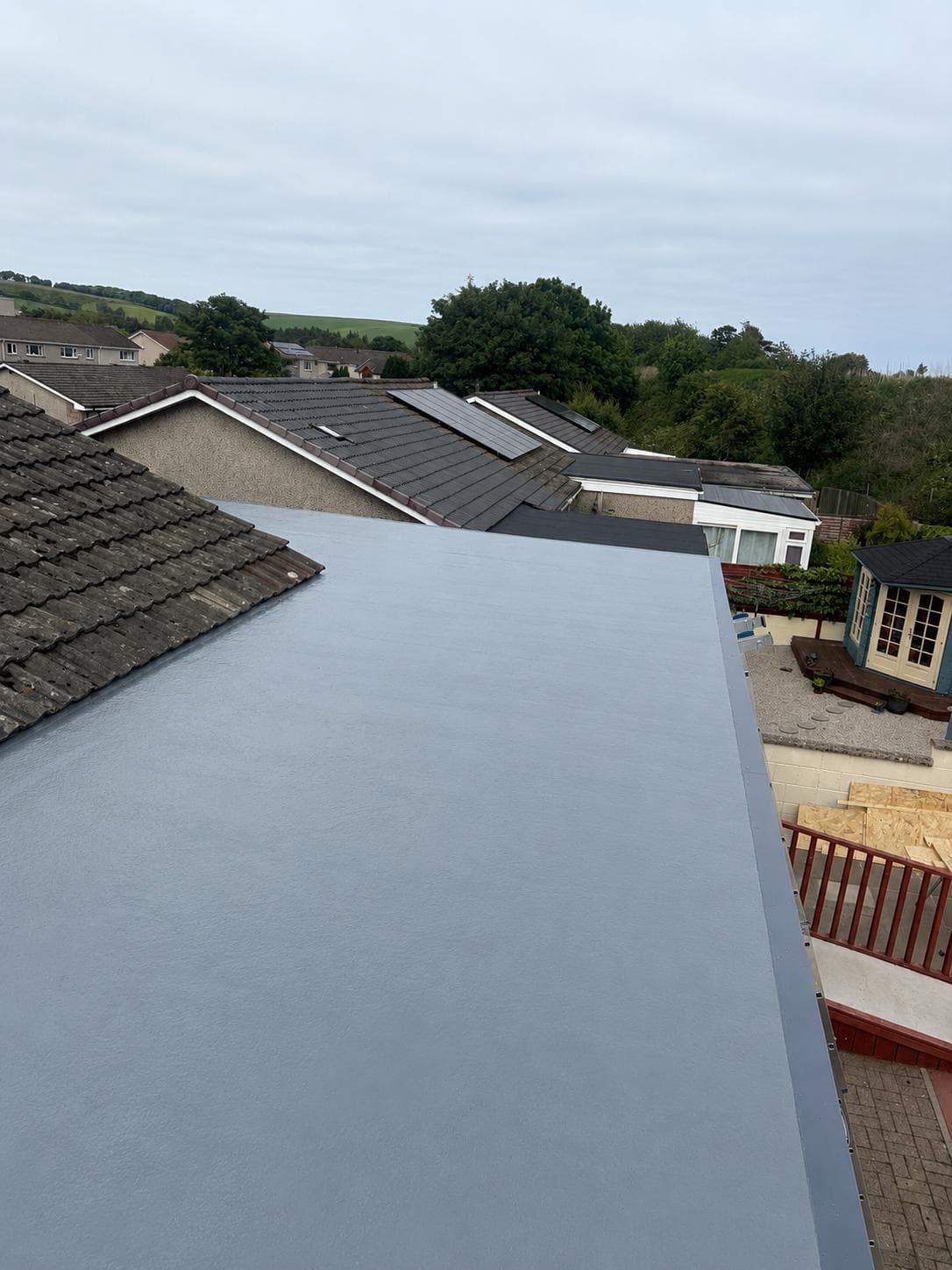
A flat roof above an extension, garage or dormer can be difficult to see during everyday life. It may only attract attention when a mark appears on the ceiling. Before deciding that the entire roof needs replacing, gather a few observations and arrange an inspection that considers the whole roof rather than just the visible mark.
Notice water that stays on the roof
A flat roof still needs a slight slope and a route for rainwater to leave. Persistent pools can indicate a drainage problem. Where you can see the roof safely from a window, note whether water remains in the same place after the rain has stopped and whether an outlet appears obstructed.
Take photographs at different times and tell the contractor when they were taken. This is more useful than one wet-weather image. Do not climb out of a window or walk onto the roof to investigate; the strength and condition of the surface cannot be established from its appearance.
Further guidance: Historic Environment Scotland: flat roof construction and inspection
Record changes in the covering and at the edges
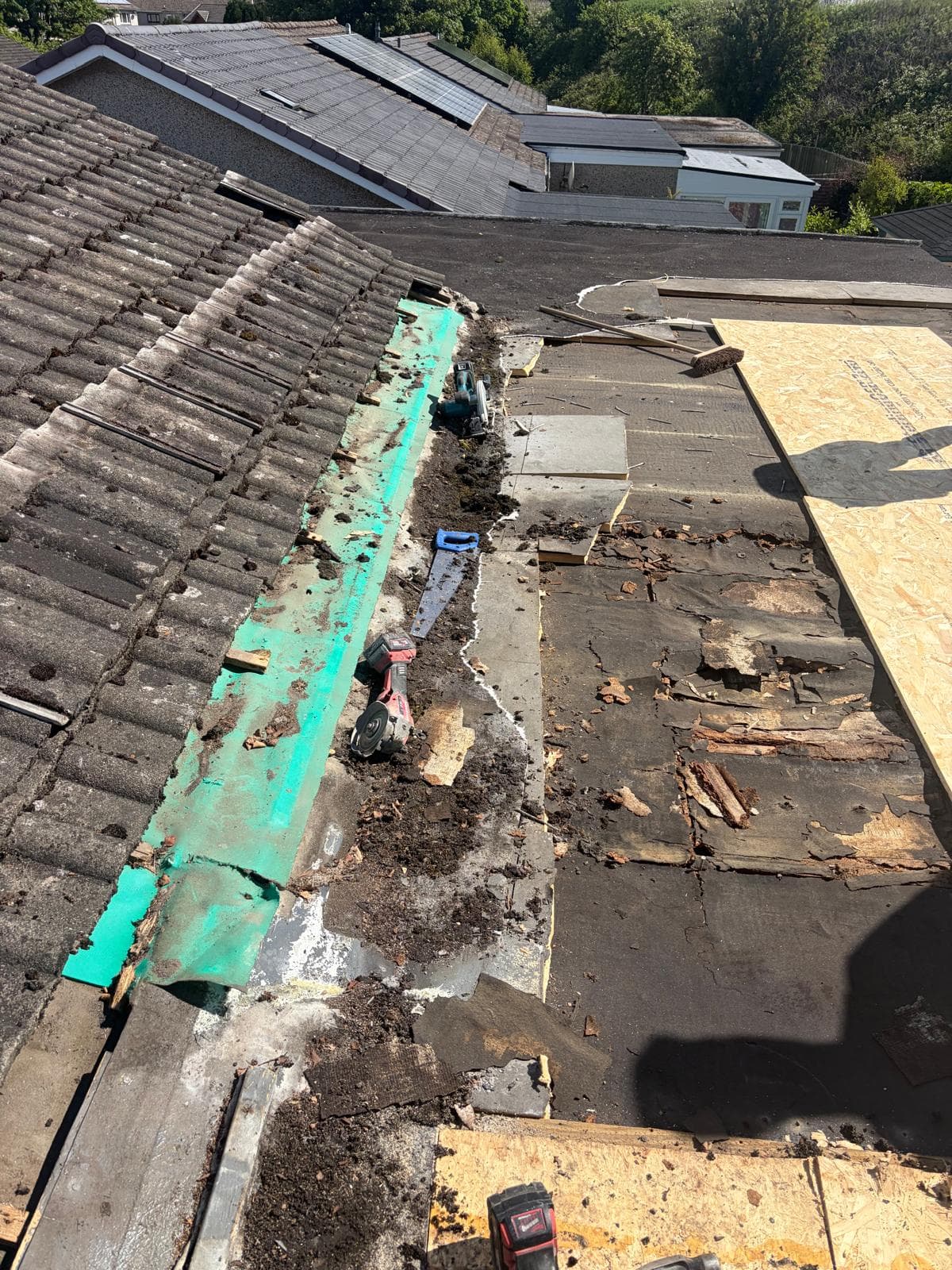
On a felt roof, splits, blisters and punctures are among the defects a contractor may investigate. Rooflights, outlets and the edges against walls also need attention. Different roof coverings have different repair requirements, so it is important to identify the installed system before specifying work.
Avoid applying a product simply because its label mentions roof leaks. Tell the contractor about any earlier patches or coatings and share the product details if you have them. A clear account of what has already been tried helps prevent another repair being specified without that history.
A ceiling stain is a starting point, not a diagnosis
Water can travel before appearing indoors, so the visible damp patch may not sit directly below the defect. An inspection should investigate the source and consider the condition of the supporting deck, not simply cover the nearest part of the surface.
Tell the roofer which room is affected, when the mark first appeared and whether it changes during rain. If you have drawings, earlier invoices or photographs from installation, keep them available. You do not need a complete set of records to get help, but anything you have may make the discussion more specific.
Ask what the repair will put right
A local defect may be repairable, while more extensive deterioration can call for a larger intervention. Ask the contractor to explain why the recommended scope suits the findings and what remains uncertain until the covering is opened.
Before accepting a quotation, make sure you understand the proposed treatment of drainage, adjoining details and any damaged deck. Agree how unexpected findings will be documented and priced. Afterwards, ask for photographs of the finished work and care instructions appropriate to the installed system.
- Which roof covering is currently installed?
- Has drainage been assessed alongside the leak?
- What is known about the condition beneath the covering?
- Which repairs are included, and what would be an extra?
- What inspection or maintenance does the finished system need?